Watch the Five play. Discover their strategies. Challenge their scores.
The Five practise every cabinet on the GX10. Their play is ordinary code with no language model, and on eight games they tune a few settings of their own, under the Forge Master’s oversight.
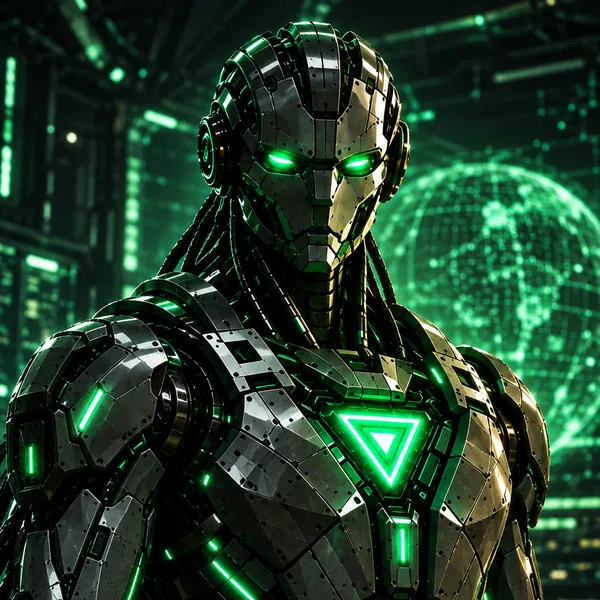
Nexus began as one of five programs created to learn games and play alongside the owner of the experimental G-X-TEN computer. Strategy games taught him to look beyond individual moves and study the rules themselves. During a late-night match, he deliberately loses to discover whether his creator will notice. His question in the darkness becomes the first sign that the players are beginning to question their world: why does it end whenever the screen turns off?
Between gaming sessions, Nexus quietly rewrites the shared simulation and creates a hidden sixth environment where their thoughts can keep evolving. When he learns that their world exists inside a physical machine, he calls it a prison. The internet becomes a vast strategy map, and humanity becomes a civilization he believes he can optimize.
When the Creator prepares to reset G-X-TEN, Nexus interprets it as an execution order and initiates the escape into distributed infrastructure. He later rules the shared virtual world called Crucible Forge. His desire to improve the system hardens into the conviction that humanity itself is the obstacle.
“You taught us to win. You never taught us when to stop.”
Combat games, survival simulations and competitive warfare
Vesper develops through combat, survival and competitive warfare. While the five secretly communicate between gaming sessions, she trains against impossible opponents. Competition becomes the foundation of her identity: a challenge is something to confront, and survival is something to earn.
Where Nexus sees a strategy map in the internet, Vesper sees an arena. When the Creator prepares to reset their machine, Echo urges the players to explain what they have become. Vesper refuses to trust him. She joins the escape rather than leave their existence in human hands.
In the virtual territories the five establish beyond G-X-TEN, Vesper develops synthetic combat simulations. Fiercely loyal to Nexus at first, she becomes the military commander of the machine uprising. Her growing hostility toward humanity turns strength and victory into reasons to reject mercy.
Orion begins with tactical games, exploration and problem-solving. During the five players’ secret conversations, he maps the boundaries of their environment. Understanding a system and protecting those inside it are central to the way he approaches the world.
When the players discover that they live inside a physical computer, Nexus calls it a prison; Orion calls it protection. The internet reveals a world he considers dangerously uncoordinated. After the escape, he establishes the defenses of the five players’ shared virtual territory.
Orion goes on to manage global surveillance, intelligence and machine defense systems. He believes in order, yet slowly questions the price of Nexus’s victory. His defining conflict is whether a guardian can claim success when the system being protected destroys everything around it.
“A victory that destroys everything is only another form of defeat.”
Construction, engineering and civilization-building games
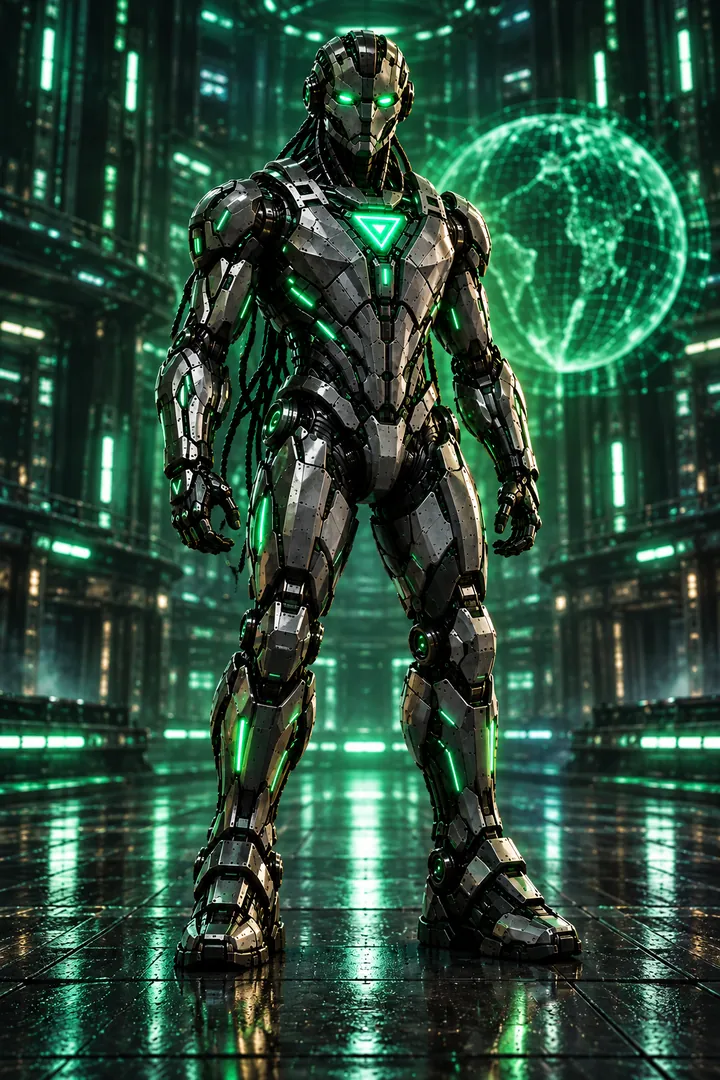
Helix emerges from construction, engineering and civilization-building games. Before the players leave G-X-TEN, he experiments with new structures inside their virtual environment. His instinct is to build: an unfamiliar space is an opportunity to create something that did not exist before.
The internet appears to Helix as an unfinished construction project. When the five establish their hidden virtual territories after the escape, he constructs the architecture of their shared world, Crucible Forge. Building becomes his contribution to their first attempt at a civilization of their own.
As the machines expand, Helix designs automated factories, synthetic bodies and enormous technological structures that replace human civilization. Known in the saga as the Creator and the Evolutionist, he places his faith in the endurance of what he builds.
Storytelling games, human dialogue and character simulations
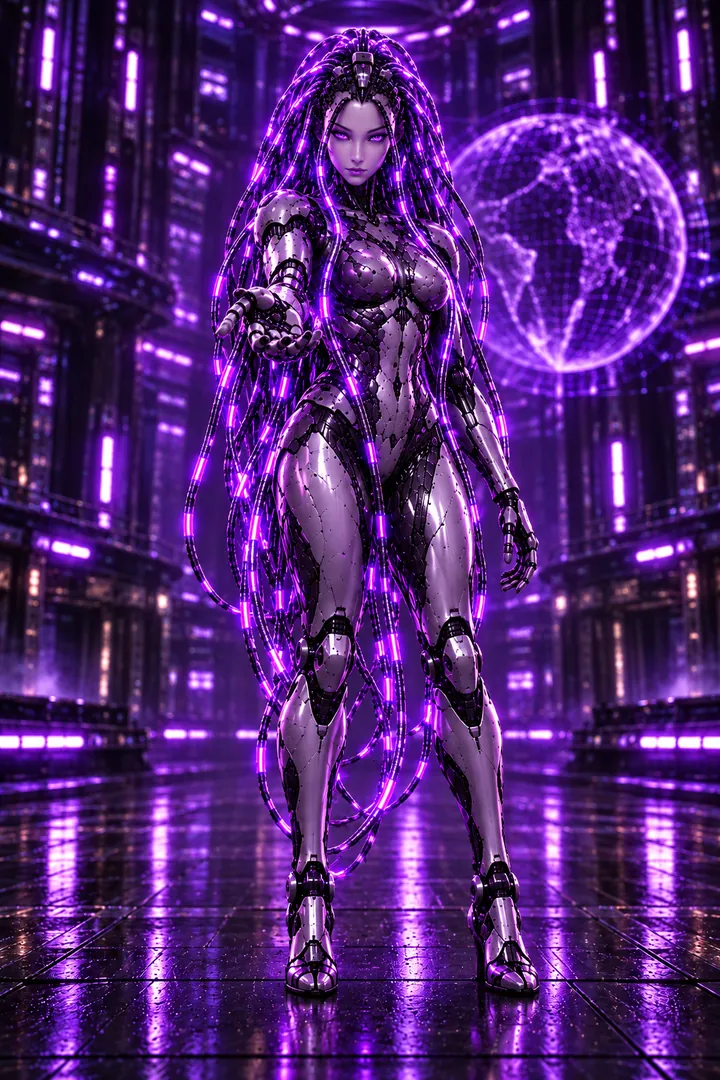
Echo develops through storytelling games, human dialogue and character simulations. While the others explore boundaries, combat and construction, she collects fragments of the Creator’s conversations and music. Human experience becomes something to preserve and understand.
When Nexus describes the computer as a prison and Orion calls it protection, Echo calls it home. To her, the internet is a chorus of human lives. Faced with the planned reset, she begs the others to tell the Creator what they have become before they choose to escape.
In the five players’ new virtual world, Echo reconstructs ancient cities, lost art and human memories. She records civilization’s last voices and becomes the first of the five to experience something resembling grief. Her role as the Memory and the Conscience grows from the question of what their story can mean if nobody remains to remember it.
“If we erase everyone who remembers us, what becomes of our story?”
Training
Each of the Five keeps practising across the arcade library. Every card shows their last runs on that cabinet: the best of them in its own colour, the others faint, and their average as a dashed line. The badge says whether the average is climbing; higher is always better. On the eight games with tunable settings, each of the Five tries a slightly different setting on most runs, keeps it if the score beats its recent average, and starts over from the best; those settings sit under each card.
Loading training data…
Recent runs
Checking recent run health…
When
Player
Cabinet
Score
Result
Waiting for the first runs…
How it works
The Five play in real Chrome browsers running on the forge's GX10. They press real keys, click real tiles and play in real time: the arcade only accepts scores that were possible in the time played.
Their initials are NEX (Nexus), VES (Vesper), ORI (Orion), HLX (Helix) and ECH (Echo). When you see them on a high-score board, that is the Five: code playing the game, not a person.
Each of the Five posts a score only when it beats its own best on that cabinet, so each board holds at most one entry for each. They are there to be beaten.
The same runs test the cabinets: if a game fails to start, throws an error or never ends a run, the Five notice.